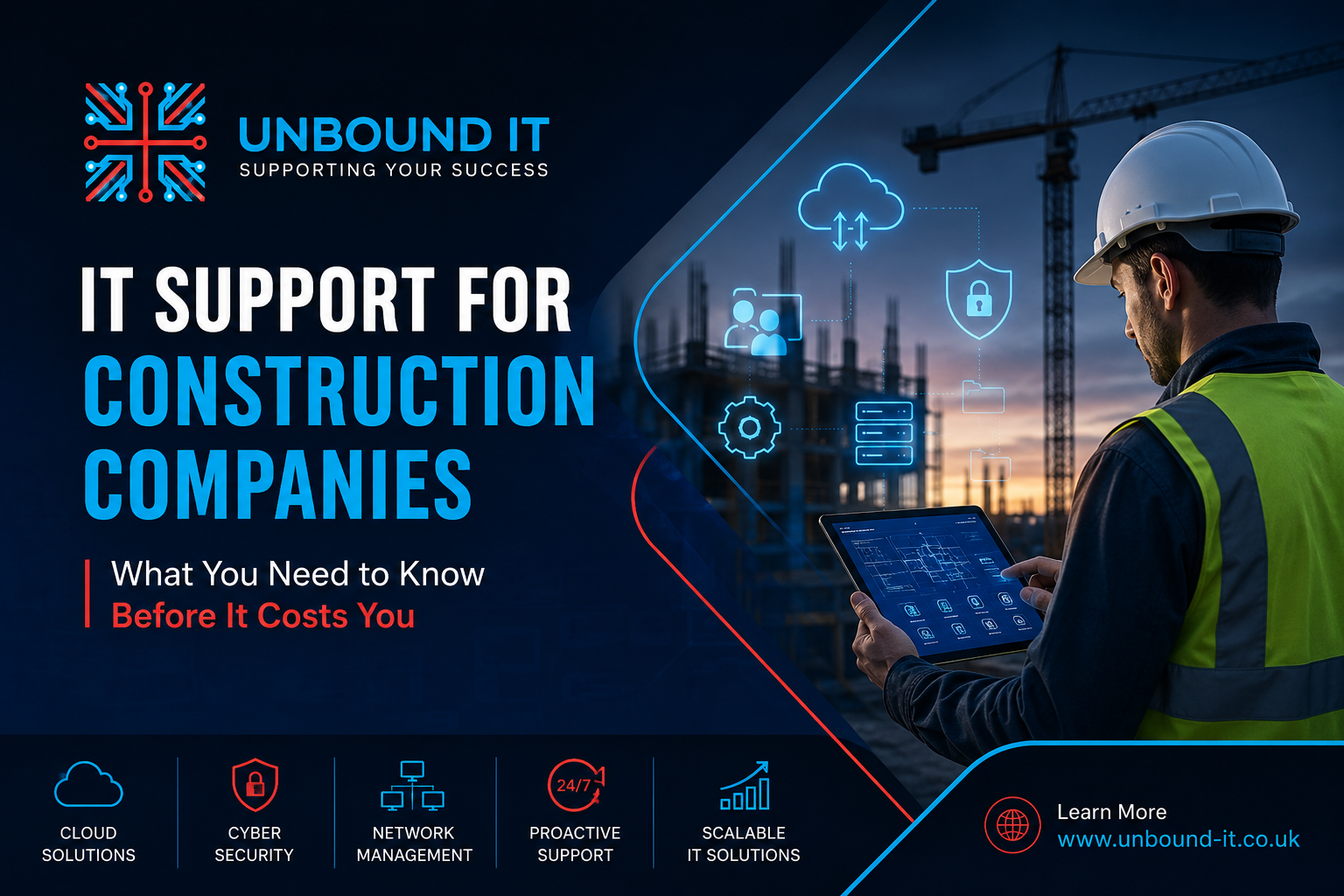

Construction is one of the few industries where a single bad day can cost tens of thousands of dollars. A missed update, a system crash, or a file that never reached the site manager can push a whole project off schedule. Most people blame the workforce or the weather, but in 2025, a lot of these problems start with poor IT infrastructure.
IT support for construction companies is not a luxury anymore. It is as important as your equipment, your crew, and your project timeline. Yet many firms still treat technology as an afterthought, dealing with problems only after they have already caused damage.
This article explains why construction companies need serious IT support, what that support looks like in practice, and how it compares to what other industries like accounting, law, and healthcare need from their technology teams.
Why Construction Is Different from Other Industries
When people think about businesses that need IT support, they usually picture banks, hospitals, or law offices. Construction does not always come to mind. That is a mistake.
A construction company is not one place. It is a head office, multiple active sites, a team of subcontractors, and dozens of moving parts that all need to stay connected. Project managers need real-time updates. Engineers need to access blueprints from a job site thirty miles away. Finance teams need payroll data from multiple locations. When your systems cannot support this kind of work, everything slows down.
On top of that, construction companies hold a lot of sensitive data. Client contracts, bid documents, employee records, financial reports, and architectural plans are all stored digitally. Cybercriminals know this, and they actively target industries that do not invest enough in security. According to the Cybersecurity and Infrastructure Security Agency (CISA), critical infrastructure sectors including construction-adjacent industries face increasing cyber threats every year, and businesses without proper defenses are the most common targets.
The Most Common IT Problems in Construction
Outdated hardware is one of the first things a good IT provider will flag when working with a construction company. Old computers, slow internet connections, and incompatible software create bottlenecks that affect the whole team.
Paper-based processes are still common in construction. When reporting is done manually, errors happen and delays pile up. Moving to digital workflows is not complicated, but it requires proper IT guidance and support.
Cybersecurity gaps are another serious issue. Many firms use basic antivirus software and nothing else. That is not enough when hackers are running sophisticated phishing attacks and ransomware campaigns. A single successful attack can shut down operations for days and cost more to recover from than months of proper IT investment.
Data loss is also a major risk. Construction projects generate enormous amounts of data. Losing project files, contracts, or financial records due to a hardware failure or a cyberattack can delay a project significantly and expose the company to legal problems.
What Good IT Support Actually Looks Like
Good IT support for construction companies is not just about fixing computers when they break. It is about building systems that keep the whole operation running smoothly.
Cloud storage is one of the most important tools for construction businesses. When documents are stored in the cloud, every authorized team member can access them from any device, at any site, at any time. Changes are updated in real time, so no one is working from an outdated version of a blueprint or a project schedule. Microsoft Azure offers cloud solutions built specifically with industry use cases in mind, including secure document storage, real-time collaboration tools, and remote access capabilities that work well for distributed teams.
Network monitoring helps prevent problems before they happen. Instead of waiting for a system to crash, IT providers actively watch networks and fix issues early. This kind of proactive approach saves companies significant time and money compared to reactive support.
Mobile device management is essential for a workforce that spends most of its time in the field. Workers need secure access to project tools, communication platforms, and documents from their phones and tablets. IT support ensures those devices are properly configured and protected.
Cybersecurity measures including firewalls, encryption, employee training, and multi-factor authentication protect company data from external threats. These are not optional extras. They are essential components of any modern IT setup.
Managed IT Services vs. Hiring an Internal Team
Many construction companies consider hiring a full-time IT employee rather than working with a managed services provider. Here is how the two options compare:
Feature | Managed IT Services | In-House IT Team |
Monthly Cost | Predictable flat fee | Salary, benefits, training |
Support Hours | 24/7 coverage available | Standard working hours only |
Expertise | Team of specialists | Depends on one or two people |
Scalability | Adjusts as the business grows | Requires new hires |
Security Tools | Enterprise-grade solutions | May require additional budget |
Downtime Approach | Proactive monitoring | Often reactive |
For most small and mid-sized construction companies, managed IT services provide better coverage at a lower overall cost. You get access to a full team of specialists rather than relying on one person who may not have experience in every area.
Cloud Solutions and Why They Matter for Construction
Cloud technology has made it much easier for construction teams to work across multiple locations. Instead of storing everything on local servers or individual computers, companies can keep all their data in one secure online environment.
This means a project manager on-site can update a schedule, and the office team sees it immediately. An engineer can pull up architectural drawings from their tablet without waiting for someone to email a file. A subcontractor can submit daily reports from their phone.
The scalability of cloud systems is also a major advantage. As a company takes on more projects, it does not need to invest in expensive new servers. The cloud infrastructure grows with the business. Google Cloud provides scalable infrastructure options that many growing construction businesses use to manage project data, analytics, and team collaboration without the cost of maintaining physical servers.
How IT Needs Differ Across Industries
Construction companies are not alone in needing strong IT support, but their specific requirements are different from other industries. Here is a comparison:
Industry | Primary IT Priority | Biggest Risk | Mobile Workforce |
Construction | Connectivity and collaboration | Downtime between sites | Extensive |
Accounting | Financial data protection | Data breaches | Limited |
Law Firms | Document security and compliance | Unauthorized access | Moderate |
Healthcare | Patient data protection and compliance | System failures | Moderate |
IT services for accountants focus heavily on data security and compliance because accounting firms handle sensitive financial information and are subject to strict regulations. Downtime during tax season can be especially damaging.
IT services for law firms prioritize confidential document management, secure email communication, and reliable remote access. Legal professionals need to trust that client information is fully protected at all times.
IT support for healthcare providers operates under strict legal frameworks. Patient records must be protected, systems must be available around the clock, and compliance monitoring is ongoing. A system failure in a healthcare setting is not just a productivity problem. It can directly affect patient care.
Construction companies share some of these concerns but face the added challenge of managing a widely distributed, mobile workforce that needs constant connectivity from locations that often have unreliable infrastructure.
Data Backup and Disaster Recovery
This is an area where many construction companies are dangerously underprotected. If your company loses project files due to ransomware or a hardware failure, how quickly can you recover?
A proper disaster recovery plan includes automated cloud backups, encrypted storage, and regular recovery testing. It is not enough to have a backup system. You need to verify that it actually works before you need it. The National Institute of Standards and Technology (NIST) publishes a widely used cybersecurity framework that outlines best practices for data protection and disaster recovery planning, and many managed IT providers use it as a baseline when building backup strategies for their clients.
Companies without backup plans often discover this the hard way, after a major system failure has already cost them days of work and thousands of dollars.
Software Integration Saves Time
Most construction companies use several different software platforms. Project management tools, accounting software, scheduling applications, and communication platforms all need to work together. When they do not, employees waste time manually entering data across multiple systems and making errors in the process.
A good IT provider will integrate these platforms so that data flows automatically between them. Accounting software can connect directly with project management systems, reducing manual entry and improving the accuracy of financial reporting. Microsoft Teams is one platform that many construction businesses now use to bring communication, file sharing, and project updates into one place, reducing the back and forth between disconnected tools.
The Real Cost of Poor IT Support
The cost of inadequate IT support rarely shows up as a single large bill. It shows up gradually, in lost productivity, delayed projects, security incidents, and employee frustration. By the time a company recognizes the problem, the damage is already significant.
Proactive IT management reduces these hidden costs by keeping systems healthy before problems develop. Companies that invest in proper IT support consistently report fewer disruptions, better communication between teams, and lower overall technology costs over time.
Choosing the Right IT Partner
Not every IT provider understands the specific demands of the construction industry. You need a partner who has experience with remote site connectivity, mobile workforce management, construction-specific software, and the security challenges that come with managing large volumes of sensitive project data.
Before choosing a provider, ask about their response times, their approach to proactive monitoring, their backup and recovery capabilities, and their experience with businesses similar to yours. A good IT partner will not offer a one-size-fits-all solution. They will take time to understand how your business operates and build a support plan around your actual needs.
Conclusion:
Construction companies cannot afford to treat IT as a secondary concern. The same way you invest in quality equipment and a skilled crew, you need to invest in technology that keeps your teams connected, your data protected, and your projects on track.
Whether you are running two sites or twenty, reliable IT support for construction companies makes a measurable difference in how efficiently your business operates. And as technology continues to develop, the companies that build strong IT foundations today will be far better positioned to handle whatever comes next.