
Healthcare today runs on technology as much as it runs on people. From patient records and appointment systems to diagnostics and communication, everything depends on fast, secure, and reliable IT infrastructure. When that system slows down or fails, the impact isn’t just operational it directly affects patient care.
That’s why IT support for healthcare providers is no longer optional. It’s a core part of delivering safe, efficient, and compliant healthcare services. At the same time, the expectations placed on IT teams have increased. Data protection laws, cybersecurity threats, and the need for 24/7 system availability make this space more complex than ever.
This is where professional IT support services and managed IT services step in not just to fix problems, but to prevent them.
In this blog, we’ll break down what healthcare-focused IT support really involves, how it compares to general IT support for small business, and why working with a specialist partner like Unbound IT UK can make a measurable difference.
Understanding IT Support in Healthcare
Healthcare IT is not the same as standard business IT. A retail shop can afford downtime for a few hours. A clinic or hospital cannot.
Every healthcare provider relies on systems such as:
- Electronic Health Records (EHR)
- Appointment scheduling software
- Diagnostic tools and integrations
- Secure communication systems
- Billing and insurance platforms
If any of these systems fail, it can delay treatment, disrupt workflows, and compromise patient trust.
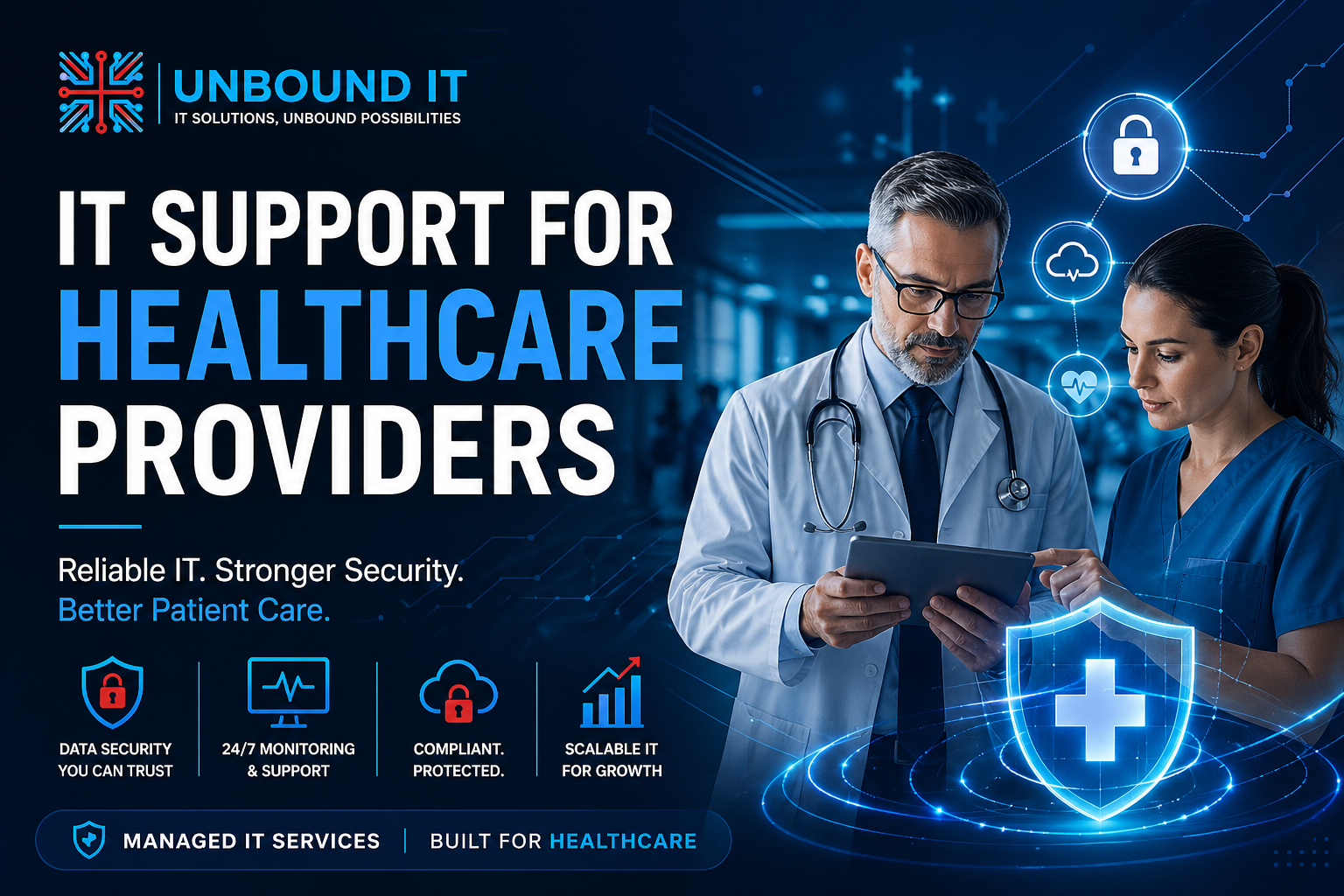
That’s why IT support for healthcare providers focuses on three critical pillars: uptime, security, and compliance.
Unlike general IT support, healthcare IT must ensure that systems are always accessible, data is fully protected, and operations comply with strict regulations like GDPR in the UK.
Why Healthcare Needs Specialized IT Support
Most businesses need IT support. But healthcare providers operate in a high-risk, high-responsibility environment.
The difference becomes clear when you compare:
| Factor | Healthcare IT Support | General IT Support for Small Business |
|---|---|---|
| Downtime Impact | Can affect patient safety | Mostly financial/productivity loss |
| Data Sensitivity | Highly confidential medical data | Standard business/customer data |
| Compliance | Strict (GDPR, NHS standards) | Moderate |
| Availability | 24/7 critical systems | Often business hours |
| Cybersecurity Risk | Very high (target for attacks) | Moderate |
Because of these factors, IT support services for healthcare must be proactive rather than reactive.
The Role of Managed IT Services in Healthcare
Traditional IT support works on a “break-fix” model. Something goes wrong, and then it gets fixed.
That approach doesn’t work in healthcare.
Managed IT services provide continuous monitoring, maintenance, and improvement of your systems. Instead of waiting for problems, they prevent them.
Here’s what that looks like in practice:
- Systems are monitored 24/7
- Security threats are detected early
- Software updates are applied automatically
- Backups are performed regularly
- Performance is continuously optimized
This approach ensures that healthcare providers can focus on patients instead of technical issues.
Cybersecurity: The Biggest Concern in Healthcare IT
Healthcare is one of the most targeted sectors for cyberattacks. The reason is simple medical data is extremely valuable.
A single breach can expose:
- Patient records
- Financial information
- Medical histories
This can lead to legal consequences, financial penalties, and loss of reputation.
Strong IT support services include:
- Advanced firewall protection
- Endpoint security
- Email filtering systems
- Data encryption
- Regular security audits
More importantly, managed providers like Unbound IT UK implement proactive strategies to reduce risk before it becomes a problem.
Compliance and Data Protection
Healthcare providers in the UK must follow strict regulations, especially under GDPR.
Failure to comply can result in heavy fines and legal action.
Good IT support for healthcare providers ensures:
- Secure data storage and transmission
- Controlled access to patient records
- Regular compliance audits
- Clear documentation and reporting
This is not just about avoiding penalties it’s about maintaining patient trust.
Why Small Healthcare Practices Need IT Support Too
There’s a common misconception that only large hospitals need advanced IT support.
In reality, small clinics and practices face the same risks, often with fewer resources.
This is where IT support for small business overlaps with healthcare IT.
Small practices benefit from:
- Affordable managed IT services
- Scalable solutions as they grow
- Reduced need for in-house IT staff
- Access to expert-level support
The difference is that healthcare-focused providers tailor these services to meet medical compliance and operational needs.
Improving Patient Experience Through IT
IT support isn’t just about backend systems. It directly impacts patient experience.
With the right systems in place, healthcare providers can:
- Reduce waiting times
- Offer online appointment booking
- Enable telehealth services
- Improve communication with patients
Reliable managed IT services ensure these systems run smoothly without interruptions.
Cloud Solutions in Healthcare IT
Cloud technology has transformed how healthcare providers manage data.
Instead of relying on physical servers, data is stored securely in the cloud, making it accessible from anywhere.
Benefits include:
- Remote access for healthcare professionals
- Improved data backup and recovery
- Lower infrastructure costs
- Enhanced collaboration
However, cloud systems must be properly configured and secured, which is where expert IT support services play a critical role.
The Cost of Poor IT Support
Many healthcare providers try to cut costs by using minimal IT support. This often leads to bigger problems later.
The hidden costs include:
- System downtime
- Data breaches
- Lost patient trust
- Compliance penalties
Investing in professional managed IT services is not an expense it’s a safeguard.
Why Choose a Specialist Like Unbound IT UK
Not all IT providers understand healthcare.
Working with a specialist like Unbound IT UK ensures that your systems are built and managed with healthcare-specific needs in mind.
They provide:
- Tailored IT support for healthcare providers
- Proactive monitoring and maintenance
- Advanced cybersecurity solutions
- Compliance-focused strategies
- Scalable services for growing practices
Instead of offering generic solutions, they align IT systems with your operational goals.
Future Trends in Healthcare IT Support
Healthcare IT is evolving quickly. Providers need to stay ahead of trends to remain competitive.
Key developments include:
- AI-driven diagnostics and automation
- Increased use of telemedicine
- Stronger cybersecurity frameworks
- Integration of IoT medical devices
- Data-driven patient care
To keep up, healthcare providers need reliable IT support services that adapt to change.
Conclusion
Healthcare and technology are now inseparable. Every patient interaction, every diagnosis, and every record depends on systems that must work flawlessly.
That’s why IT support for healthcare providers is no longer just about fixing technical issues. It’s about ensuring safety, compliance, and efficiency at every level.
Whether you run a large hospital or a small clinic, investing in professional managed IT services gives you the stability and security needed to focus on what truly matters, patient care.
With a trusted partner like Unbound IT UK, healthcare providers can move from reactive problem-solving to proactive growth, building systems that are secure, scalable, and ready for the future.
Frequently Asked Questions
What is IT support for healthcare providers?
IT support for healthcare providers refers to specialized technical services designed to manage, secure, and maintain healthcare systems such as electronic health records, appointment software, and communication tools. It ensures systems run smoothly, patient data stays protected, and operations remain compliant with regulations.
Why do healthcare providers need specialized IT support?
Healthcare providers deal with sensitive patient data and critical systems that must be available at all times. Unlike general IT support, healthcare IT focuses on data security, compliance, and zero downtime, making specialized support essential.
What are managed IT services in healthcare?
Managed IT services in healthcare involve ongoing monitoring, maintenance, and support of IT systems by an external provider. Instead of fixing issues after they occur, these services prevent problems through proactive management, ensuring reliability and security.
How is IT support for healthcare different from IT support for small business?
IT support for healthcare is more complex because it involves strict compliance requirements, higher cybersecurity risks, and the need for 24/7 system availability. While IT support for small business focuses on general operations, healthcare IT directly impacts patient care and safety.
What services are included in healthcare IT support?
Healthcare IT support typically includes system monitoring, cybersecurity protection, data backup, cloud management, compliance support, software updates, and helpdesk services to resolve technical issues quickly.
How does IT support improve patient care?
Reliable IT systems reduce delays, improve communication, and ensure accurate access to patient records. This allows healthcare providers to focus more on treatment and less on technical problems, leading to better patient outcomes.
What are the biggest IT challenges in healthcare?
The biggest challenges include cybersecurity threats, data breaches, system downtime, compliance with regulations, and managing complex digital systems. Without proper IT support services, these issues can disrupt operations and harm patient trust.
Is managed IT support cost-effective for small healthcare practices?
Yes, managed IT services are often more cost-effective than hiring an in-house IT team. They provide expert support, reduce downtime, and prevent costly issues, making them ideal for small clinics and growing practices.
How do IT support services ensure data security in healthcare?
IT support services use advanced security measures such as encryption, firewalls, multi-factor authentication, and regular audits to protect sensitive patient data from unauthorized access and cyber threats.
Why choose a company like Unbound IT UK for healthcare IT support?
Unbound IT UK offers tailored IT support services specifically designed for healthcare providers. Their focus on proactive management, security, and compliance helps healthcare businesses operate smoothly while reducing risks.
Can cloud solutions be safely used in healthcare IT?
Yes, cloud solutions are widely used in healthcare when properly managed. They offer secure data storage, remote access, and reliable backups, but they must be configured with strong security and compliance measures.
What happens if healthcare IT systems fail?
If IT systems fail, it can lead to delays in patient care, loss of access to medical records, and potential compliance violations. This is why having reliable managed IT services is critical for healthcare providers.